
The Samoyed dog breed: The fluffy, smiling Sammie guide
3rd September, 2026
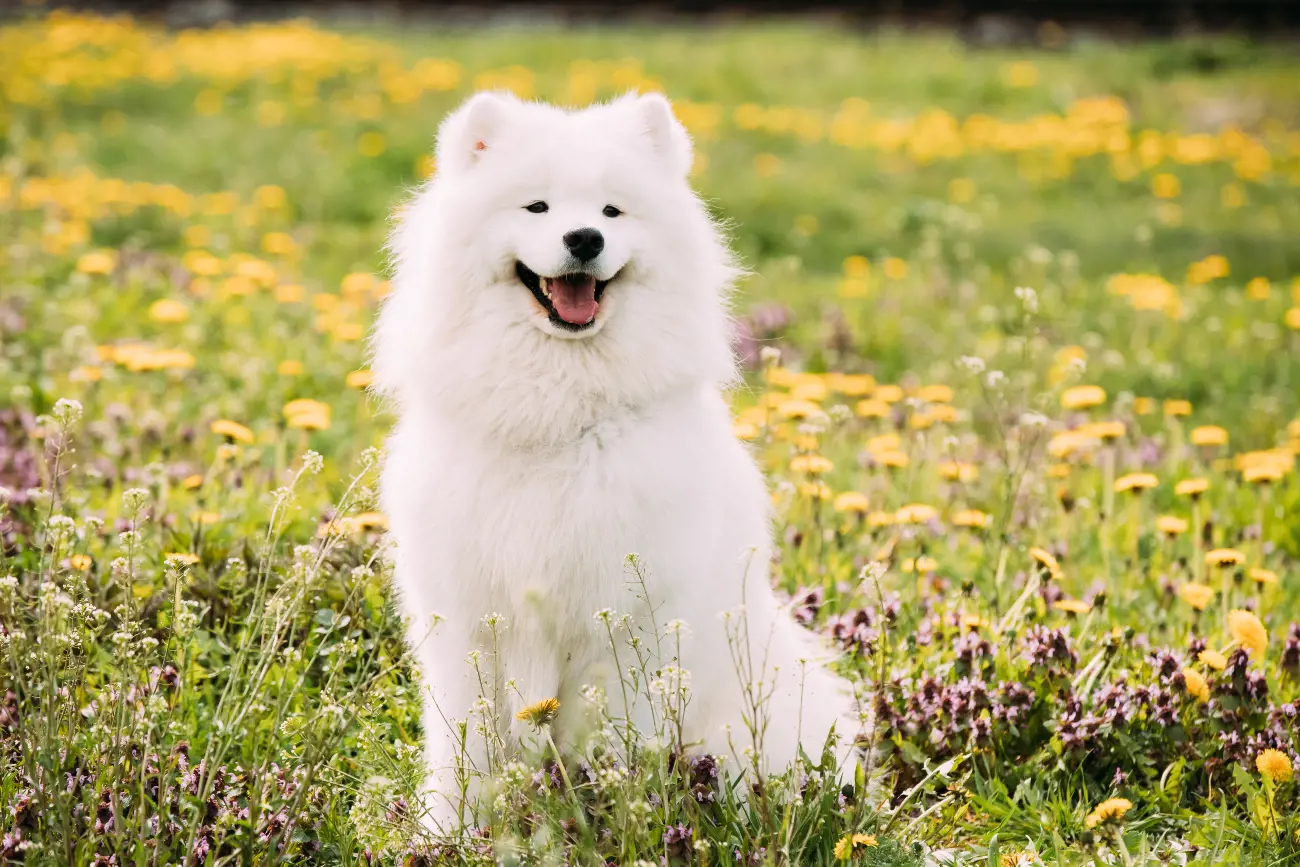
Meet the Samoyed – the walking, howling, permanently-grinning snowball that has stolen hearts from the Siberian tundra to Madison Square Garden. If you've ever wondered whether life with a Sammie would be all fluff and giggles, or whether you'd be signing up for years of hoovering white fur off your sofa, this guide has your back.
Whether you're already a proud Sammie parent or just researching your next fluffy family member (thanks, in part, to a certain pop superstar and her NFL husband), we've packed this ultimate Samoyed guide with everything you need to know – from the classic "Sammie smile" to the exercise, grooming, and health considerations that come with owning one of the world's most photogenic breeds. For even more breed-by-breed help, pop over to the Purely Pets news and advice hub after this one.
Quick Samoyed facts (at a glance)
Samoyeds are medium-sized pastoral dogs known for their pure white double coat, upturned "Sammie smile," and a lifespan of about 12 to 13 years.
They need more than two hours of exercise a day, daily grooming, and a large house is generally recommended. Once you've weighed up whether a Sammie is right for you, Purely Pets lifetime pet insurance is worth a look for keeping their long, fluffy life protected.
What is a Samoyed?
A Samoyed is a medium-sized, spitz-type that were originally bred to be working dogs from Siberia, easily recognised by its thick white double coat, curled tail, and permanently smiling expression. They were originally bred by the nomadic Samoyedic peoples to herd reindeer, pull sleds, hunt, and keep their humans warm at night.
The breed's official Kennel Club standard describes them as a "versatile worker ideally suited to the Arctic regions of Siberia" – which, translated, means they thrive on cold weather, hard work, and endless cuddles.
Are Samoyeds famous? Meet Wendy Kelce
Yes – and their celebrity status has just gone stratospheric. In September 2026, Travis Kelce officially introduced the world to Wendy, the fluffy white Samoyed he shares with his wife, Taylor Swift, when she made a scene-stealing debut in his Tommy Hilfiger Fall 2026 campaign.
The couple, who tied the knot at Madison Square Garden on 3 July 2026, had actually been keeping Wendy under wraps for a while. On the Kelce brothers' New Heights podcast, Travis revealed: "Little old Wendy's a little over a year old now. We've had her for quite a while." So while she wasn't strictly a post-wedding puppy, her big public "reveal" absolutely was a post-honeymoon moment.
Wendy is a female Samoyed and, according to fashion press, her name winks at more than one Taylor Swift song. The couple's very fluffy arrival has already inspired a wave of interest in the breed – with rescue centres reporting a spike in searches for Samoyed adoption. If Wendy's global debut has tempted you into puppy shopping, our ultimate new puppy guide is a great next click.
Samoyed history and origins
Samoyeds are an ancient breed developed by the nomadic Samoyedic peoples of Siberia, where they worked as reindeer herders, sled dogs, hunters, and guard dogs.
DNA studies suggest they're a "basal breed" that predates most modern breeds – meaning today's Sammie shares a lineage with dogs living with Siberian communities thousands of years ago.
British zoologist Ernest Kilburn-Scott is widely credited with founding the modern breed after bringing a puppy back to England from Arkhangelsk in 1889. The first official Samoyed breed standard was written in England in 1909.
Sammies also made polar history: teams of Samoyeds accompanied Fridtjof Nansen's Fram expedition and Carsten Borchgrevink's Southern Cross Expedition to Antarctica in the late 1890s – making them among the very first dogs to set paw on Antarctic ice.
What does a Samoyed look like?
Samoyeds are medium-sized, spitz-type dogs with a thick, weatherproof double coat, erect triangular ears, a wedge-shaped head, and a plumed tail carried over the back.
Size and weight
According to The Kennel Club UK breed standard:
| Trait | Male | Female |
| Height at shoulder | 51-56 cm (20-22 in) | 46-51 cm (18-20 in) |
| Weight | 20-30 kg (44-66 lb) | 16-20 kg (35-44 lb) |
| Coat colours | White, cream, white and biscuit | White, cream, white and biscuit |
The famous "Sammie smile"
Their signature look comes from the upturned corners of the mouth, which give every Samoyed the impression of a permanent grin – earning nicknames like the "Sammie smile" and "smiley dog."
It's not just adorable, either: those turned-up corners actually help prevent dribble icicles forming in freezing weather.
That gorgeous double coat
The Samoyed coat has two distinct layers. The outer "topcoat" is made of long, coarse, straight guard hairs that repel dirt, while the inner "undercoat" is dense, soft, and short – the Arctic equivalent of thermal underwear. The undercoat "blows" (i.e. sheds heavily) once or twice a year, but fine hairs float about all year round.
Fun fact for the crafty among you: shed Samoyed fur is sometimes spun into wool for knitting, with a texture similar to angora. Waste not, want not!
Samoyed temperament and personality
Samoyeds are friendly, affectionate, playful, and famously sociable – so much so that they make lovely companions but hopeless guard dogs.
Key personality traits include:
-
Sociable and loving: Sammies adore human company and often form especially strong bonds with their family.
-
Playful for life: The Samoyed Breed Council notes they "remain playful into old age," so expect zoomies well past the puppy years.
-
Vocal: Samoyeds are known for howling and "singing," not just barking. Great for expressive chats, less great if your neighbours are close by.
-
Independent thinkers: Clever, curious, and sometimes stubborn, they need positive, consistent training.
-
Escape artists: Sammies will find any weakness in your fence and go exploring, so secure gardens (and up-to-date microchip details) are a must.
Are Samoyeds good family dogs?
Yes – Samoyeds are generally excellent family dogs, especially in active households with older children. A-Z Animals specifically flags them as popular family pets thanks to their loving, loyal, upbeat personalities.
That said, a few things to keep in mind:
-
Sammies are strong and sometimes boisterous, so it's wise to supervise them with smaller children in case of accidental bowling-over.
-
With proper socialisation, they usually love other dogs and enjoy dog-park chit-chat – our top tips for socialising your puppy are a solid place to start.
-
They can live happily with a cat they've grown up with – but their prey drive means loose lead work, training and socialisation is a must on walks, or you might find yourself water-skiing across a field.
-
They don't cope well with being left alone, so they aren't ideal for households out at work all day. Four hours is a sensible maximum.
How much exercise does a Samoyed need?
Adult Samoyeds need a minimum of two hours of exercise every day, split across walks, playtime, and mental stimulation.
The Royal Kennel Club also classes them as needing "more than two hours per day." Not sure what that looks like in practice? Our guide on how much exercise your dog needs breaks it down by life stage and energy level.
Because they were bred to work in teams across Arctic tundra, Sammies are natural athletes who thrive on:
-
Long, varied walks (ideally somewhere cool) – have a nose through our ultimate guide to dog walking for leads, harnesses, and off-lead safety tips.
-
Off-lead runs in secure fields (remember that prey drive)
-
Canine sports such as agility, flyball, and even carting or mushing
-
Puzzle toys, sniff games, and reward-based training to keep their brains ticking
Under-exercised or bored Sammies can quickly become destructive or start digging, which is their polite way of saying: "Take me out, please!"
Grooming a Samoyed
Samoyeds are high-maintenance groomers and need daily brushing to keep their double coat healthy and mat-free, plus more intensive work during their twice-yearly "coat blow."
For step-by-step help with brushing, bathing, and nail trims at home, our how to groom a dog at home guide is packed with practical, vet-friendly tips.
A quick Sammie grooming checklist:
-
Brush daily with a slicker brush and undercoat rake to lift loose hair.
-
Trim the fur between paw pads as needed (your vet or nurse can advise).
-
Book a professional groom a few times a year to keep the coat in top condition.
-
Don't shave the coat. Regular clipping can interfere with the coat's natural insulation.
-
Bath rarely. Well-groomed Sammies are considered nearly "odourless" and don't need frequent bathing unless they roll in something wonderfully whiffy.
Regular grooming is also a golden opportunity to check for lumps, bumps, sore ears, and dodgy teeth – a habit that could save your pooch (and your wallet) a lot of trouble.
Training your Samoyed
Samoyeds are intelligent but independent, so they respond best to short, upbeat, reward-based training sessions started as early as possible. They're sensitive dogs, so harsh methods simply don't work; kindness and consistency will.
Our dog training basics walk-through is a great starting point, and if you're bringing home a Sammie pup, our how to train a puppy article covers those important first weeks.
Top training tips for a happy Sammie:
-
Start puppy socialisation early, introducing them to different people, animals, sounds, and environments.
-
Use positive reinforcement – treats, toys, and praise – rather than punishment.
-
Keep it varied. Sammies bore quickly, so mix obedience, tricks, and scent games.
-
Reinforce recall relentlessly. That prey drive is real.
-
Try dog sports such as agility or flyball to burn off both physical and mental energy.
Common Samoyed health problems
Samoyeds are generally a healthy breed with an above-average lifespan of about 13.1 years, but they are predisposed to a small number of hereditary conditions.
Buying from a reputable, health-tested breeder – ideally a Kennel Club Assured Breeder – is by far your best defence. If you're new to breeder research, our how to buy a puppy responsibly guide runs through the questions to ask and red flags to spot.
The main conditions to be aware of include:
| Condition | What it is | Why it matters |
| Hip dysplasia | Poorly fitting hip joints causing pain and arthritis. See our full explainer on dysplasia in dogs. | Screening via the BVA/Kennel Club Hip Dysplasia Scheme is recommended for breeding dogs. |
| Samoyed hereditary glomerulopathy | An X-linked genetic kidney disease, more severe in males. | A genetic test is available; ask breeders about it. |
| Diabetes mellitus | Chronic pancreatic inflammation or autoimmune attack on insulin-producing cells. | Can appear at any age but tends to be more common to appear in middle-aged Sammies (average age 7). |
| Progressive retinal atrophy (PRA) | Gradual loss of vision leading to blindness. | Symptoms usually appear between 2–5 years of age. |
| Pulmonary stenosis | Narrowing of the pulmonary valve. | Can cause tiring, arrhythmias, and heart failure. |
| Cataracts & eye ulcers | Various eye issues. | BVA/KC eye screening is available. |
| Sebaceous adenitis | Uncommon autoimmune skin disease. | Managed with medicated bathing and vet care. |
Because Sammies aren't cheap dogs to treat if things go wrong, most vets and welfare bodies strongly recommend budgeting for dog insurance from day one – and having quick access to a vet for smaller worries.
Purely Pets customers get 24/7 video consultations via the Joii app included with their policy, which is ideal for those "is this normal?" moments at all hours.
How much does a Samoyed cost in the UK?
In the UK, a Samoyed puppy typically costs £1,500 to £3,500, with lifetime ownership estimated at up to £13,000 (Pets4Homes) or as much as £24,500 (independent breed-cost calculators), depending on care levels.
A big chunk of that lifetime bill goes on food and healthcare, so it's worth reading our dog nutrition guide to feed your Sammie well without breaking the bank.
Ongoing costs to budget for include food, preventive healthcare (vaccinations, flea and worming, annual check-ups), professional grooming, equipment, training, boarding, and – crucially – vet bills or pet insurance.
Why Samoyeds and pet insurance make a perfect pair
Because Samoyeds are predisposed to conditions such as hip dysplasia, hereditary kidney disease, diabetes, and eye problems, pet insurance can be one of the smartest investments you make as a Sammie owner.
Vet bills for large-breed orthopaedic surgery, ongoing kidney disease management, or lifelong diabetes care can quickly climb into the thousands – and no one wants to be making financial decisions about their fluffy family member in an emergency.
If you welcome a Sammie pup home from a breeder or rescue, Purely Pets puppy insurance is designed to grow with them, while lifetime pet insurance keeps that cover rolling year after year.
With Purely Pets dog insurance, you get:
-
Easy online claims management
-
Flexible excess and cover options are available
-
Interest-free monthly payments
Ready to protect your Sammie's smile for life? Get a quick online quote in minutes.
Is a Samoyed the right dog for you?
Samoyeds are best suited to active, sociable households who have plenty of time, space, and patience for daily grooming, long walks, and lots of company. They repay all that effort with unfailing loyalty, a silly sense of humour, and – of course – that world-famous grin.
If you can offer a Sammie the exercise, structure, and cuddles they need (and hoover often enough to survive the fluff), you'll be signing up for one of the most joyful breeds in the pastoral group – and, judging by Wendy Kelce's very glamorous rise to fame, one of the most photogenic, too.
Frequently asked questions
Samoyeds typically live 12 to 13 years, with a 2024 UK study putting their average life expectancy at 13.1 years – slightly above the UK purebred average of 12.7 years.
No – Samoyeds are considered a nearly "odourless" breed when well-groomed and only need occasional baths, unless they've had a good roll in something whiffy. Our grooming a dog at home guide has all the fresh-Sammie basics covered.
Yes, Samoyeds can live happily with cats they've been raised with, but their strong prey drive means supervision and careful introductions are important.
Samoyed puppies should have shorter, more frequent bursts of activity rather than long walks, to protect their developing joints. Adults need at least two hours of exercise a day – see our full dog exercise guide for age-appropriate rules of thumb.
Samoyeds don't cope well with being left alone and shouldn't be on their own for more than around four hours; they can become stressed, vocal, and destructive.
Samoyeds aren't the easiest first dog. They're better suited to experienced owners who can commit to daily grooming, plenty of exercise, and consistent, positive training. If you're a first-time owner determined to give it a go, our ultimate new puppy guide is a good foundation.
Yes, Samoyeds shed all year and have particularly heavy seasonal "coat blows" once or twice a year, when their dense undercoat comes out in clouds.
Helpful Pages
Recent Posts
Pet Insurance Quote
- 98% claims paid *
- Claims paid directly to vets
- 24/7 vet video consultations
- Interest free monthly payments